Chapter 5: Exploring Mixtures and Their Separation
๐Ÿ‡ฎ๐Ÿ‡ณ National Curriculum Standard โ–พ
๐Ÿ› Vidyoric Certified โ€ข Dr. Ananya Sharma
๐Ÿ”ฅ 0 days
โšก 0 Sparks +
Chapter 5: Exploring Mixtures and Their Separation

Video Lecture 1: Pure Substances vs Mixtures, True Solutions & Concentration Math

STEP 1: VIDEO LESSON ๐Ÿ“ค Uploaded HTML5 Video

๐Ÿ“‘ Interactive Chapter Bookmarks

0 chapters

๐ŸŽ™๏ธ Synchronized Transcript

๐Ÿ”
# Video Lecture Script: Pure Substances vs Mixtures, True Solutions & Concentration Math

**Step Order:** 1 (Stage 1)
**Duration:** ~06:00 minutes
**Speaker:** Dr. Ananya Sharma (Senior Science Educator)
**Tone:** Experimental, clear, engaging English

---

### [00:00 - 01:30] Introduction: What Does "Pure" Mean in Science?
**(Visual: Dr. Sharma holds a packet of supermarket milk labeled "100% Pure Milk" in one hand, and a sealed glass ampoule of distilled water ($H_2O$) in the other.)**

**Dr. Ananya Sharma:**
"Welcome back, my sharp chemical detectives! When you buy a packet of ghee, salt, or milk from the market with a label that proudly proclaims '100% Pure', what does that word mean to you?

To a consumer, 'pure' simply means free from adulterationโ€”no artificial chemicals, no diluted dirt.

However, to a chemist, milk is definitely **NOT pure**! Milk is a complex mixture of water, proteins, butterfat globules, and milk sugars!

In chemistry, a **Pure Substance** is *a form of matter that consists of only a single type of constituent particle, having fixed, constant chemical properties throughout*. Pure copper contains only copper atoms; pure sodium chloride ($NaCl$) contains fixed sodium and chloride ions in a 1:1 ratio.

When two or more pure substances mingle together without any chemical bonding, we create a **Mixture**!"

---

### [01:30 - 03:30] Homogeneous vs Heterogeneous Mixtures & True Solutions
**(Visual: Dr. Sharma dissolves sugar crystals into water, stirring until it turns completely clear, then mixes chalk powder into water showing opaque suspended particles.)**

**Dr. Ananya Sharma:**
"Mixtures fall into two fundamental classes:
1. **Homogeneous Mixtures:** The constituent substances blend so thoroughly that the composition is completely uniform throughout. You cannot see any phase boundary!
- A spoonful of salt or sugar dissolved in water, air (a mixture of $N_2, O_2, Ar, CO_2$), and solid brass (an alloy of $70\%$ copper and $30\%$ zinc).
2. **Heterogeneous Mixtures:** The components remain physically separated into distinct visible phases.
- Sand mixed with iron filings, oil floating on water, and muddy pond water!

Now, what is a **Solution**?
A solution is a homogeneous mixture of two or more substances. It consists of two parts:
- **The Solute:** The component present in lesser quantity that dissolves (e.g., salt).
- **The Solvent:** The continuous medium present in larger quantity in which the solute dissolves (e.g., water)."

---

### [03:30 - 06:00] Concentration Calculations & Saturated Solutions
**(Visual: Step-by-step formula cards animated on screen with practical beaker volume measurements.)**

**Dr. Ananya Sharma:**
"Now, let us master the mathematics of concentration:

1. **Saturated Solution:** A solution in which no more solute can be dissolved at that specific temperature. If you heat the beaker, the solubility increases and you can dissolve more!
2. **Unsaturated Solution:** A solution that contains less than the maximum saturation amount of solute at that temperature.

How do we express the concentration of a solution? By using two vital NCERT formulas:
- **Mass by Mass Percentage ($\% \text{ w/w}$):**
$$\text{Concentration} = \frac{\text{Mass of Solute}}{\text{Mass of Solution}} \times 100$$
Remember: $\text{Mass of Solution} = \text{Mass of Solute} + \text{Mass of Solvent}$!
*(If 40 g of salt is dissolved in 320 g of water, total solution mass is $360\text{ g}$. Concentration $= \frac{40}{360} \times 100 = \mathbf{11.1\%}$!)*

- **Mass by Volume Percentage ($\% \text{ w/v}$):**
$$\text{Concentration} = \frac{\text{Mass of Solute}}{\text{Volume of Solution}} \times 100$$

In our next step, we will shine laser beams through liquids to witness the mesmerizing **Tyndall Effect**! Keep experimenting!"
STEP 2 โ€ข CONCEPT NOTES โฑ๏ธ 3 min read
๐Ÿ“Œ 0 Notes

Pure Substances vs Mixtures, Solutions & Concentration Calculations
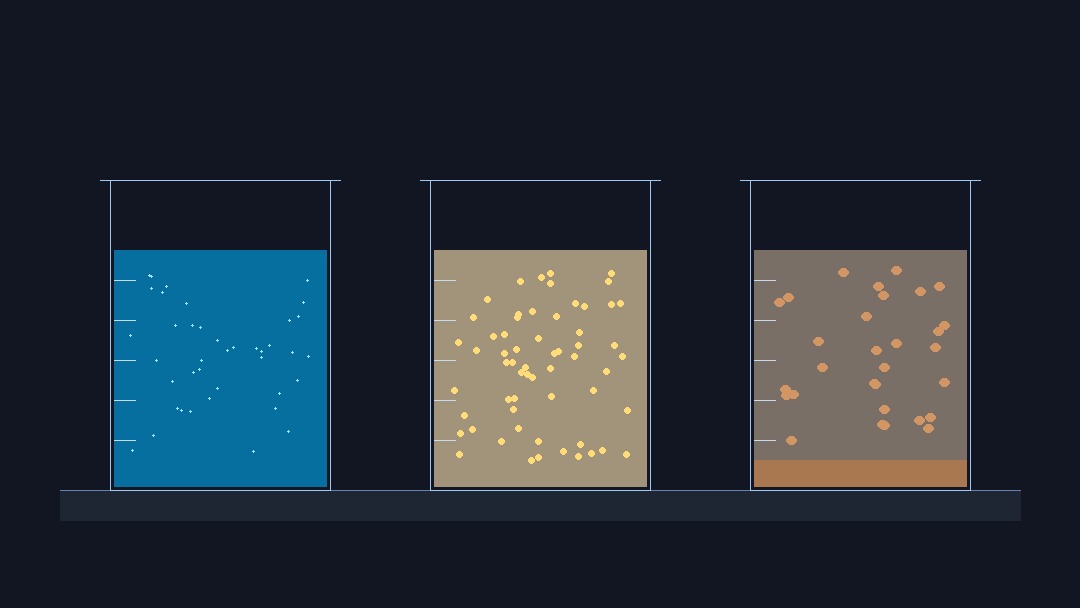
Figure 5.1: Taxonomic Classification of Matter: Elements, Compounds, Homogeneous and Heterogeneous Mixtures

1. What is a Pure Substance?

In chemistry, a pure substance consists of a single type of particle possessing fixed, definite chemical properties throughout (e.g., pure iron, pure distilled water, pure sucrose).

  • Elements: Chemical substances that cannot be broken down into simpler substances by chemical reactions (e.g., gold $Au$, oxygen $O_2$, copper $Cu$).
  • Compounds: Substances composed of two or more elements chemically combined in a fixed proportion by mass (e.g., water $H_2O$ in a fixed 1:8 mass ratio of hydrogen to oxygen; methane $CH_4$).
  • Mixtures: Substances containing two or more pure components physically mixed in any arbitrary ratio without chemical bonding.

2. Homogeneous vs Heterogeneous Mixtures

  • Homogeneous Mixtures: Uniform composition and single phase throughout (e.g., salt dissolved in water, clean atmospheric air, brass alloy).
  • Heterogeneous Mixtures: Non-uniform composition with physically distinct phases (e.g., sand and iron filings, oil and water, chalk powder in water).

3. Concentration of a Solution (High-Yield NCERT Formulas)

A solution is composed of a Solute (substance dissolved) and a Solvent (dissolving medium):

$$\text{Mass of Solution} = \text{Mass of Solute} + \text{Mass of Solvent}$$

1. Mass by Mass Percentage ($\% \text{ w/w}$):

$$\text{Concentration } (\% \text{ w/w}) = \frac{\text{Mass of Solute}}{\text{Mass of Solution}} \times 100$$

2. Mass by Volume Percentage ($\% \text{ w/v}$):

$$\text{Concentration } (\% \text{ w/v}) = \frac{\text{Mass of Solute}}{\text{Volume of Solution}} \times 100$$

3. Volume by Volume Percentage ($\% \text{ v/v}$):

$$\text{Concentration } (\% \text{ v/v}) = \frac{\text{Volume of Solute}}{\text{Volume of Solution}} \times 100$$
? Solved Numerical: If $40\text{ g}$ of common salt is dissolved in $320\text{ g}$ of water, what is the concentration? $\text{Mass of Solution} = 40 + 320 = 360\text{ g}$. $\text{Concentration} = \frac{40}{360} \times 100 = \mathbf{11.1\% \text{ (w/w)}}$!
๐Ÿ“
Comprehensive High-Yield Mathematical Relations & Theorems

Complete step-by-step derivations, step traps, and LaTeX formula sheet breakdowns...

๐Ÿ”’

End of Free Notes Preview

Unlock the complete deck to access full LaTeX formula breakdowns, interactive diagrams, exam traps, and personal margin highlights!

๐Ÿ”‘ Sign In / Register Free
๐Ÿง  Review Due (Interval: 1 Day) Card 1 of 8 (SM-2 Active Recall)
QUESTION (FRONT) Space โ†ต to flip
What is a Pure Substance in chemistry?
ANSWER & EXPLANATION (BACK) Space โ†ต to flip
A form of matter that consists of only one single type of constituent particle, having uniform chemical properties throughout.
๐Ÿ’ก
Tap Card to Flip & Check Your Answer Active recall prompt: Flip the card or press Space โ†ต to unlock the SM-2 recall difficulty rating.
๐Ÿ”’
Step 4 is Locked

Final Diagnostic Mastery Quiz: Exploring Mixtures and Separation

This ๐Ÿ“ LaTeX Concept Notes is part of the full verified curriculum for Chapter 5: Exploring Mixtures and Their Separation. Unlock the full deck to gain permanent access to all 11 interactive stages, active recall cards, and diagnostic checkpoints.

Deck Access Price
100% Free with Account
Instant Access
โœ“ UPI & Cards Supported
๐Ÿ”‘ Sign In / Register to Unlock Free →
๐Ÿ”’
Step 5 is Locked

Final Diagnostic Mastery Quiz: Exploring Mixtures and Separation

This โšก Diagnostic Quiz is part of the full verified curriculum for Chapter 5: Exploring Mixtures and Their Separation. Unlock the full deck to gain permanent access to all 11 interactive stages, active recall cards, and diagnostic checkpoints.

Deck Access Price
100% Free with Account
Instant Access
โœ“ UPI & Cards Supported
๐Ÿ”‘ Sign In / Register to Unlock Free →
๐Ÿ”’
Step 6 is Locked

Final Diagnostic Mastery Quiz: Exploring Mixtures and Separation

This ๐Ÿง  Active Recall Flashcards is part of the full verified curriculum for Chapter 5: Exploring Mixtures and Their Separation. Unlock the full deck to gain permanent access to all 11 interactive stages, active recall cards, and diagnostic checkpoints.

Deck Access Price
100% Free with Account
Instant Access
โœ“ UPI & Cards Supported
๐Ÿ”‘ Sign In / Register to Unlock Free →
๐Ÿ”’
Step 7 is Locked

Final Diagnostic Mastery Quiz: Exploring Mixtures and Separation

This ๐ŸŽฅ Video Lesson is part of the full verified curriculum for Chapter 5: Exploring Mixtures and Their Separation. Unlock the full deck to gain permanent access to all 11 interactive stages, active recall cards, and diagnostic checkpoints.

Deck Access Price
100% Free with Account
Instant Access
โœ“ UPI & Cards Supported
๐Ÿ”‘ Sign In / Register to Unlock Free →
๐Ÿ”’
Step 8 is Locked

Final Diagnostic Mastery Quiz: Exploring Mixtures and Separation

This ๐Ÿ“ LaTeX Concept Notes is part of the full verified curriculum for Chapter 5: Exploring Mixtures and Their Separation. Unlock the full deck to gain permanent access to all 11 interactive stages, active recall cards, and diagnostic checkpoints.

Deck Access Price
100% Free with Account
Instant Access
โœ“ UPI & Cards Supported
๐Ÿ”‘ Sign In / Register to Unlock Free →
๐Ÿ”’
Step 9 is Locked

Final Diagnostic Mastery Quiz: Exploring Mixtures and Separation

This Microlearning Step is part of the full verified curriculum for Chapter 5: Exploring Mixtures and Their Separation. Unlock the full deck to gain permanent access to all 11 interactive stages, active recall cards, and diagnostic checkpoints.

Deck Access Price
100% Free with Account
Instant Access
โœ“ UPI & Cards Supported
๐Ÿ”‘ Sign In / Register to Unlock Free →
๐Ÿ”’
Step 10 is Locked

Final Diagnostic Mastery Quiz: Exploring Mixtures and Separation

This ๐Ÿ“ LaTeX Concept Notes is part of the full verified curriculum for Chapter 5: Exploring Mixtures and Their Separation. Unlock the full deck to gain permanent access to all 11 interactive stages, active recall cards, and diagnostic checkpoints.

Deck Access Price
100% Free with Account
Instant Access
โœ“ UPI & Cards Supported
๐Ÿ”‘ Sign In / Register to Unlock Free →
๐Ÿ”’
Step 11 is Locked

Final Diagnostic Mastery Quiz: Exploring Mixtures and Separation

This โšก Diagnostic Quiz is part of the full verified curriculum for Chapter 5: Exploring Mixtures and Their Separation. Unlock the full deck to gain permanent access to all 11 interactive stages, active recall cards, and diagnostic checkpoints.

Deck Access Price
100% Free with Account
Instant Access
โœ“ UPI & Cards Supported
๐Ÿ”‘ Sign In / Register to Unlock Free →