Chapter 8: Heredity
๐Ÿ‡ฎ๐Ÿ‡ณ National Curriculum Standard โ–พ
๐Ÿ› Vidyoric Certified โ€ข Dr. Ramesh Pardhi
๐Ÿ”ฅ 0 days
โšก 0 Sparks +
Chapter 8: Heredity

Video Lecture: Foundations of Heredity & Mendelian Laws

STEP 1: VIDEO LESSON ๐Ÿ“ค Uploaded HTML5 Video

๐Ÿ“‘ Interactive Chapter Bookmarks

0 chapters

๐ŸŽ™๏ธ Synchronized Transcript

๐Ÿ”
# Video Lecture Script: Step 1 โ€” Foundations of Heredity & Mendelian Laws
**Chapter**: Chapter 8: Heredity
**Target Duration**: 06:15 minutes (~780 words)
**Host / Educator**: Dr. Ramesh Pardhi, Senior CBSE Biology Educator
**Visual Style**: High-definition digital chalkboard with animated Punnett squares, chromosome cutaways, and microscopic pea plant close-ups.

---

### [00:00 - 00:50] Scene 1: The Enigma of Inheritance & Variation
**(Visual: Dr. Ramesh Pardhi standing beside an split screen: on the left, a field of genetically identical cloned sugarcane; on the right, a vibrant crowd of human faces displaying distinct hair colours, earlobe attachments, and heights.)**

**Dr. Ramesh Pardhi (Engaging, Warm Tone)**:
"Hello, future scientists and learners! Look at your hands. Look at your earlobes. Are they free and dangling, or closely attached to the side of your head? Have you ever paused to ask yourself: *Why do children resemble their parents, yet remain visibly unique individuals?*

If you walk through a field of sugarcane, you will notice something fascinating: each stalk looks virtually identical to the next. That is asexual vegetative propagation. But step into a human classroom, and no two individuals look alike.

In this masterclass, we unravel the blueprint of life itself: **Heredity and Mendelian Genetics**. We will discover why small inaccuracies in DNA replication generate diversity, how an Austrian monk cracked the mathematical laws of inheritance using garden peas, and why the biological determination of sex is a strictly mathematical 50-50 flip determined entirely by the father. Let's step into Mendel's garden!"

---

### [00:50 - 02:15] Scene 2: The Monk with a Mathematical Vision โ€” Gregor Johann Mendel
**(Visual: 3D animated illustration of Gregor Johann Mendel in the St. Thomas Monastery garden in Brno. Transitions to a 3D diagram of *Pisum sativum*, showing its bisexual flower structure, keeled petals preventing foreign pollen, and 7 contrasting trait pairs.)**

**Dr. Ramesh Pardhi**:
"In the mid-19th century, while others debated vague theories of 'blending blood', Gregor Johann Mendel brought the precision of physics and mathematics to botany. He chose the common garden pea, *Pisum sativum*, and this was a stroke of genius.

Why peas? First, they have obvious, unmistakable contrasting traits: plants are either distinctly tall or dwarf; seeds are either smooth round or wrinkled; flowers are either violet or white. There are no confusing shades in between. Second, pea flowers are bisexual and naturally self-pollinate because their reproductive organs are enclosed inside petals. Third, an experimenter can easily cross-pollinate them by removing immature anthersโ€”a technique called emasculationโ€”and dusting pollen by hand. And finally, they produce hundreds of seeds in a single season. Mendel didn't just observe; he counted every single seed with mathematical rigor."

---

### [02:15 - 04:00] Scene 3: The Monohybrid Cross โ€” Dominance and Segregation
**(Visual: Dynamic animated Punnett square. A pure tall plant TT crosses with dwarf tt. In F1, all plants are tall Tt. The F1 plants self-pollinate, revealing the 3:1 phenotypic and 1:2:1 genotypic ratios in F2.)**

**Dr. Ramesh Pardhi**:
"Let us recreate Mendel's monohybrid cross. Mendel took pure-breeding tall plantsโ€”genotype capital TTโ€”and crossed them with pure-breeding dwarf plantsโ€”genotype small tt.

What did the first generation, the F1 progeny, look like? You might guess medium-sized plants. But nature showed zero intermediate blending! Every single F1 plant was tall. Where did the dwarf trait go? Did it vanish?

Mendel allowed these F1 tall plants to self-pollinate. And in the F2 generation, something spectacular happened: dwarf plants reappeared! Exactly one out of every four plants was dwarf.

From this, Mendel formulated two epochal insights:
Number one: **The Principle of Dominance**. Traits are controlled by pairs of factors, which we now call alleles. When tall allele capital T and dwarf allele small t exist together in a heterozygous plant, only capital T expresses its phenotype. Tall is dominant; dwarf is recessive.
Number two: **The Law of Segregation**. When gametes form during meiosis, the two alleles separate completely into different germ cells. Gametes are pure; they never blend. The resulting phenotypic ratio in F2 is 3 tall to 1 dwarf, but the true genotypic ratio is 1 pure tall TT, to 2 hybrid tall Tt, to 1 pure dwarf ttโ€”a 1:2:1 ratio!"

---

### [04:00 - 05:20] Scene 4: The Molecular Mechanism โ€” How Genes Dictate Traits
**(Visual: 3D molecular animation zooming from the plant stem into a cell nucleus, unwinding a DNA double helix, showing mRNA transcription, ribosome translation into a functional enzyme, and the catalysis of plant growth hormone Gibberellin.)**

**Dr. Ramesh Pardhi**:
"Now, let's step from 1865 into modern molecular biology. What actually is a gene?

A gene is a specific sequence of DNA that carries the chemical code to synthesize a specific protein. How does this make a pea plant tall? Plant cells synthesize a growth hormone called gibberellin, which drives stem elongation. The chemical reaction that synthesizes gibberellin requires a specialized enzyme.

The dominant allele capital T contains the correct nucleotide instructions to build a highly active, efficient enzyme. Abundant gibberellin is made, and the plant grows tall! The recessive allele small t has a slight mutation that makes the enzyme inefficient or defective. Less hormone is produced, and the plant remains dwarf.

This is the beauty of biology: genetics is cellular biochemistry in action!"

---

### [05:20 - 06:15] Scene 5: Sex Determination & Conclusion
**(Visual: Human karyotype showing 22 pairs of autosomes and the 23rd pair: XX in female vs XY in male. Animated sperm race showing 50% X and 50% Y sperm meeting an X ovum.)**

**Dr. Ramesh Pardhi**:
"Finally, how is biological sex determined in humans? We possess 23 pairs of chromosomes. 22 pairs are autosomes, identical in both sexes. The 23rd pair is our sex chromosomes: females carry two normal X chromosomesโ€”XXโ€”while males carry one X and a shorter Y chromosomeโ€”XY.

Every mother produces eggs containing only an X chromosome. But the father produces two types of sperm in exact 50-50 proportions: half carrying X, half carrying Y. If an X sperm fertilises the ovum, a girl is born (XX). If a Y sperm fertilises the ovum, a boy is born (XY).

The scientific truth is absolute: it is the father's gamete that determines the child's sex, with a precise 50% probability at every single birth.

In this deck, explore the deep dive concept notes, solve the interactive flashcards, master the 16-cell dihybrid cross, and conquer your board examinations. Happy learning!"
STEP 2 โ€ข CONCEPT NOTES โฑ๏ธ 4 min read
๐Ÿ“Œ 0 Notes

Accumulation of Variation During Reproduction

How does biological reproduction balance identity with diversity? Reproduction generates offspring that possess the defining body plan of their species, yet carry subtle unique variations.
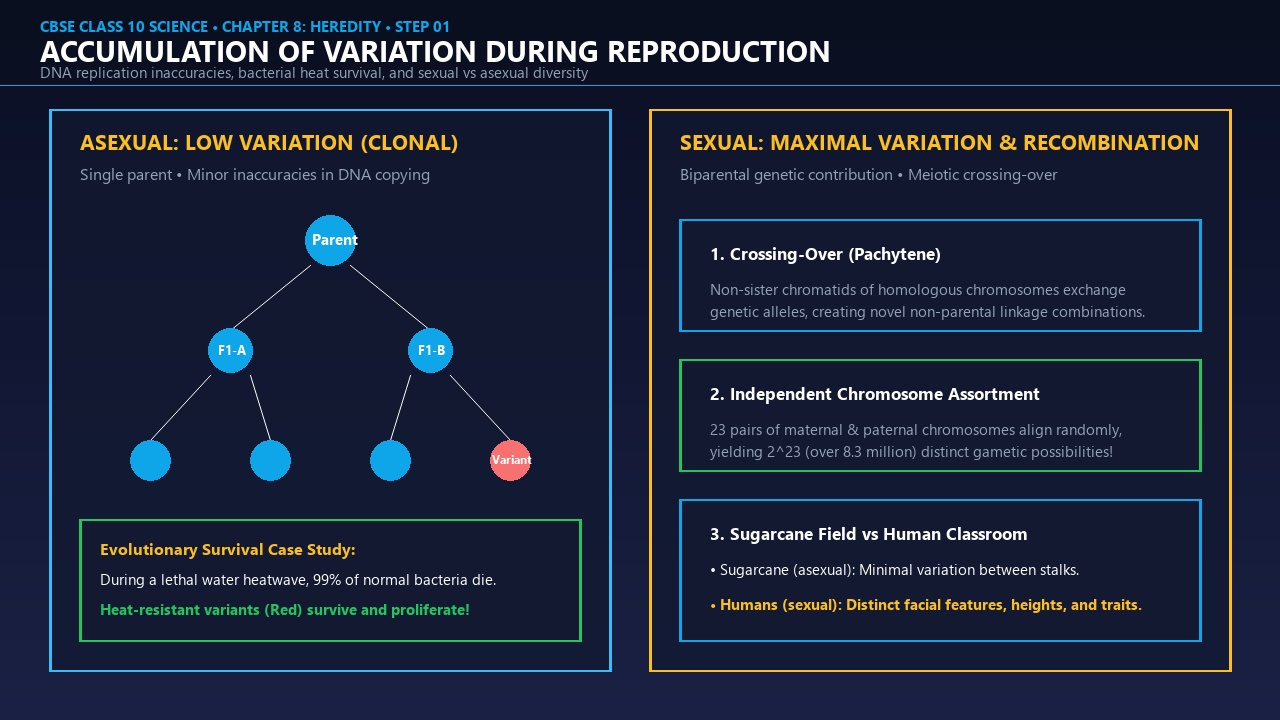
Figure 8.1: Accumulation of Variation over Generations

1. Asexual Reproduction & Clonal Uniformity

  • In asexually reproducing organisms (such as binary fission in bacteria or sugarcane cuttings), offspring arise from a single parental genome.
  • Origin of Difference: Inbuilt, spontaneous biochemical inaccuracies during DNA polymerase copying.
  • Because DNA copying is generally accurate, offspring are virtually identical to each other and to the parent organism.

2. Sexual Reproduction & Combinatorial Diversity

  • Involves two parents providing distinct paternal and maternal genomes.
  • Diversity is maximized via:
  1. Meiotic Recombination (Crossing Over) in Pachytene.
  2. Independent Assortment of Chromosomes ($2^{23}$ combinations in humans).
  3. Random Gamete Fusion.
  • Walk into a sugarcane field: every plant appears identical. Walk into a human assembly: no two individuals share the same face or physical profile.

3. Evolutionary Advantage: The Bacterial Heatwave Example

Do all variations offer equal survival value? No. Survival depends entirely on environmental selection.

  • Consider a bacterial population thriving in moderate freshwater.
  • If global warming or thermal discharge abruptly heats the water, most normal bacteria are denatured and perish.
  • A small minority with a pre-existing mutation granting heat tolerance survive, reproduce, and preserve the lineage from total extinction.
  • Key Principle: Variation provides the raw material for adaptation and evolution.
                  โ”Œโ”€โ”€โ”€โ”€โ”€โ”€โ”€โ”€โ”€โ”€โ”€โ”€โ”€โ”€โ”€โ”€โ”€โ”€โ”€โ”€โ”€โ”€โ”€โ”€โ”€โ”€โ”€โ”€โ”€โ”€โ”€โ”€โ”€โ”€โ”€โ”€โ”€โ”€โ”€โ”€โ”€โ”€โ”€โ”€โ”€โ”€โ”
                  โ”‚           REPRODUCTIVE DIVERSITY             โ”‚
                  โ””โ”€โ”€โ”€โ”€โ”€โ”€โ”€โ”€โ”€โ”€โ”€โ”€โ”€โ”€โ”€โ”€โ”€โ”€โ”€โ”€โ”€โ”€โ”ฌโ”€โ”€โ”€โ”€โ”€โ”€โ”€โ”€โ”€โ”€โ”€โ”€โ”€โ”€โ”€โ”€โ”€โ”€โ”€โ”€โ”€โ”€โ”€โ”˜
                                         โ”‚
                 โ”Œโ”€โ”€โ”€โ”€โ”€โ”€โ”€โ”€โ”€โ”€โ”€โ”€โ”€โ”€โ”€โ”€โ”€โ”€โ”€โ”€โ”€โ”€โ”€โ”ดโ”€โ”€โ”€โ”€โ”€โ”€โ”€โ”€โ”€โ”€โ”€โ”€โ”€โ”€โ”€โ”€โ”€โ”€โ”€โ”€โ”€โ”€โ”€โ”
                 โ–ผ                                               โ–ผ
   โ”Œโ”€โ”€โ”€โ”€โ”€โ”€โ”€โ”€โ”€โ”€โ”€โ”€โ”€โ”€โ”€โ”€โ”€โ”€โ”€โ”€โ”€โ”€โ”€โ”€โ”€โ”€โ”€โ”€โ”                  โ”Œโ”€โ”€โ”€โ”€โ”€โ”€โ”€โ”€โ”€โ”€โ”€โ”€โ”€โ”€โ”€โ”€โ”€โ”€โ”€โ”€โ”€โ”€โ”€โ”€โ”€โ”€โ”€โ”€โ”
   โ”‚    ASEXUAL REPRODUCTION    โ”‚                  โ”‚    SEXUAL REPRODUCTION     โ”‚
   โ”œโ”€โ”€โ”€โ”€โ”€โ”€โ”€โ”€โ”€โ”€โ”€โ”€โ”€โ”€โ”€โ”€โ”€โ”€โ”€โ”€โ”€โ”€โ”€โ”€โ”€โ”€โ”€โ”€โ”ค                  โ”œโ”€โ”€โ”€โ”€โ”€โ”€โ”€โ”€โ”€โ”€โ”€โ”€โ”€โ”€โ”€โ”€โ”€โ”€โ”€โ”€โ”€โ”€โ”€โ”€โ”€โ”€โ”€โ”€โ”ค
   โ”‚ โ€ข Single parent            โ”‚                  โ”‚ โ€ข Two parents              โ”‚
   โ”‚ โ€ข Clonal offspring         โ”‚                  โ”‚ โ€ข Recombinant offspring    โ”‚
   โ”‚ โ€ข Minor DNA copy errors    โ”‚                  โ”‚ โ€ข Meiotic crossing-over    โ”‚
   โ”‚ โ€ข Sugarcane field uniformityโ”‚                 โ”‚ โ€ข Unique human individuals โ”‚
   โ””โ”€โ”€โ”€โ”€โ”€โ”€โ”€โ”€โ”€โ”€โ”€โ”€โ”€โ”€โ”€โ”€โ”€โ”€โ”€โ”€โ”€โ”€โ”€โ”€โ”€โ”€โ”€โ”€โ”˜                  โ””โ”€โ”€โ”€โ”€โ”€โ”€โ”€โ”€โ”€โ”€โ”€โ”€โ”€โ”€โ”€โ”€โ”€โ”€โ”€โ”€โ”€โ”€โ”€โ”€โ”€โ”€โ”€โ”€โ”˜
๐Ÿ“
Comprehensive High-Yield Mathematical Relations & Theorems

Complete step-by-step derivations, step traps, and LaTeX formula sheet breakdowns...

๐Ÿ”’

End of Free Notes Preview

Unlock the complete deck to access full LaTeX formula breakdowns, interactive diagrams, exam traps, and personal margin highlights!

๐Ÿ”‘ Sign In / Register Free
STEP 3 โ€ข CONCEPT NOTES โฑ๏ธ 5 min read
๐Ÿ“Œ 0 Notes

Gregor Johann Mendel & The Choice of Pisum sativum

Gregor Johann Mendel (1822โ€“1884), an Austrian monk educated in mathematics and physics at the University of Vienna, cracked the rules of heredity by combining mathematical ratios with botanical crosses.

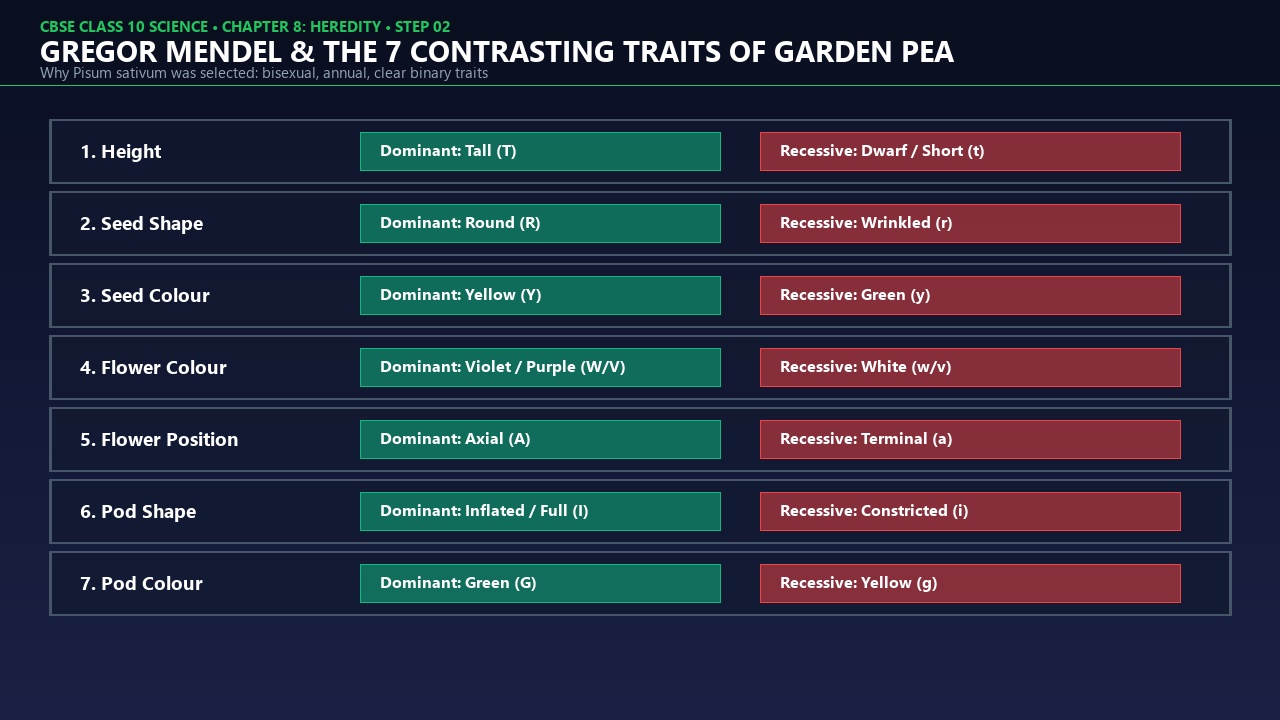
Figure 8.2: The Seven Contrasting Traits of Pisum sativum

Why Mendel Chose the Garden Pea (Pisum sativum)

  1. Discrete Contrasting Traits: Characters display clear binary states without intermediate blends (e.g., plants are either distinctly tall or dwarf).
  2. Bisexual Flowers: Possess both stamens and carpels, naturally favoring self-pollination.
  3. Easy Cross-Pollination: Anthers can be removed before maturity (emasculation) to prevent selfing, followed by dusting with foreign pollen (artificial pollination).
  4. Short Life Cycle: Annual plant completing its life cycle in 3โ€“4 months, allowing multi-generational experiments within a single year.
  5. Prolific Progeny Yield: Produces large numbers of seeds per cross, providing robust sample sizes.

Mendel's Seven Contrasting Trait Pairs

Trait CharacterDominant ExpressionRecessive Expression
Stem HeightTall ($T$)Dwarf / Short ($t$)
Flower ColourViolet / Purple ($W$)White ($w$)
Flower PositionAxial ($A$)Terminal ($a$)
Pod ShapeInflated ($I$)Constricted ($i$)
Pod ColourGreen ($G$)Yellow ($g$)
Seed ShapeRound ($R$)Wrinkled ($r$)
Seed / Cotyledon ColourYellow ($Y$)Green ($y$)
                โ”Œโ”€โ”€โ”€โ”€โ”€โ”€โ”€โ”€โ”€โ”€โ”€โ”€โ”€โ”€โ”€โ”€โ”€โ”€โ”€โ”€โ”€โ”€โ”€โ”€โ”€โ”€โ”€โ”€โ”€โ”€โ”€โ”€โ”€โ”€โ”€โ”€โ”€โ”€โ”€โ”€โ”€โ”€โ”€โ”€โ”€โ”€โ”
                โ”‚        PISUM SATIVUM ADVANTAGES              โ”‚
                โ””โ”€โ”€โ”€โ”€โ”€โ”€โ”€โ”€โ”€โ”€โ”€โ”€โ”€โ”€โ”€โ”€โ”€โ”€โ”€โ”€โ”€โ”€โ”ฌโ”€โ”€โ”€โ”€โ”€โ”€โ”€โ”€โ”€โ”€โ”€โ”€โ”€โ”€โ”€โ”€โ”€โ”€โ”€โ”€โ”€โ”€โ”€โ”˜
                                       โ”‚
        โ”Œโ”€โ”€โ”€โ”€โ”€โ”€โ”€โ”€โ”€โ”€โ”€โ”€โ”€โ”€โ”€โ”ฌโ”€โ”€โ”€โ”€โ”€โ”€โ”€โ”€โ”€โ”€โ”€โ”€โ”€โ”€โ”ผโ”€โ”€โ”€โ”€โ”€โ”€โ”€โ”€โ”€โ”€โ”€โ”€โ”€โ”€โ”ฌโ”€โ”€โ”€โ”€โ”€โ”€โ”€โ”€โ”€โ”€โ”€โ”€โ”€โ”€โ”€โ”
        โ–ผ               โ–ผ              โ–ผ              โ–ผ               โ–ผ
   [Clear Traits]  [Bisexual]   [Short Cycle]   [High Seed]    [Easy Artificial]
   (Tall / Dwarf)  (Self-poll)  (Annual herb)   (Large count)     (Emasculation)
๐Ÿ“
Comprehensive High-Yield Mathematical Relations & Theorems

Complete step-by-step derivations, step traps, and LaTeX formula sheet breakdowns...

๐Ÿ”’

End of Free Notes Preview

Unlock the complete deck to access full LaTeX formula breakdowns, interactive diagrams, exam traps, and personal margin highlights!

๐Ÿ”‘ Sign In / Register Free
STEP 4 โ€ข CONCEPT NOTES โฑ๏ธ 6 min read
๐Ÿ“Œ 0 Notes

Monohybrid Cross: Inheritance of a Single Character

A monohybrid cross studies the inheritance pattern of one pair of contrasting traits (such as plant height).

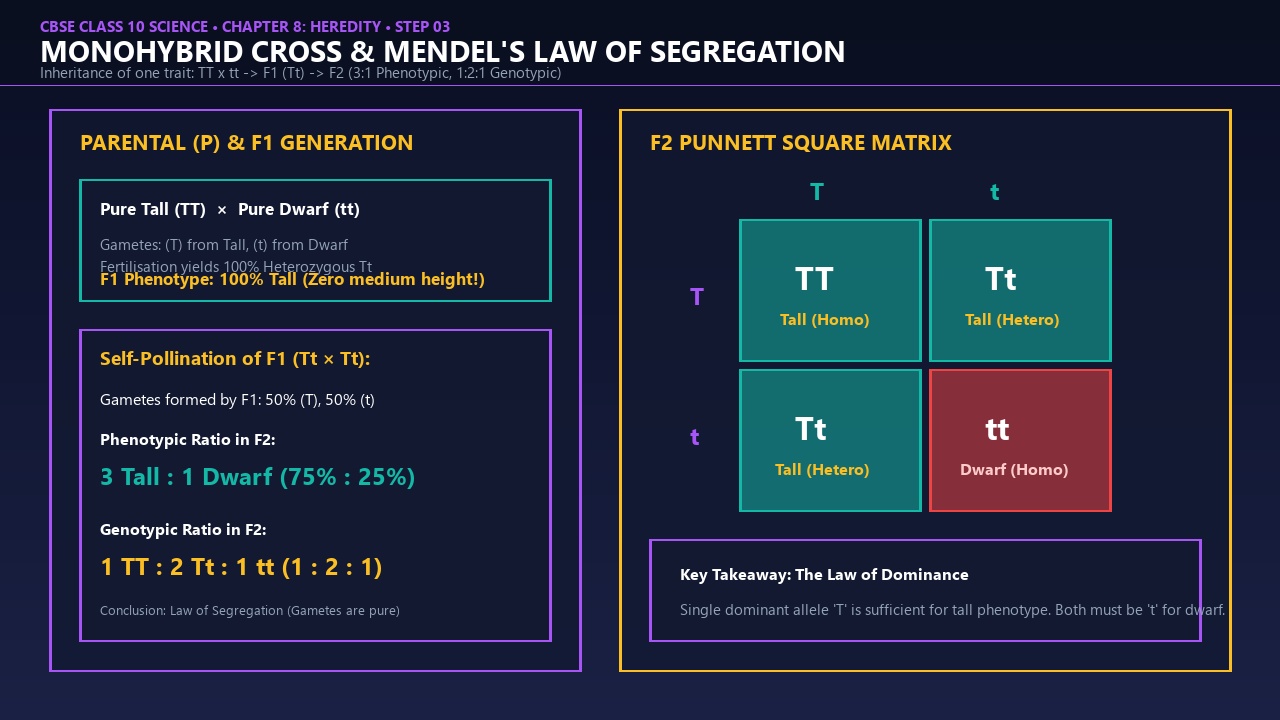
Figure 8.3: Monohybrid Cross & Punnett Square

1. The Cross Architecture

  1. Parental Generation ($P$):
  • Pure-breeding Tall ($TT$) $\times$ Pure-breeding Dwarf ($tt$).
  • Gametes formed: $T$ from tall parent, $t$ from dwarf parent.
  1. First Filial Generation ($F_1$):
  • Genotype: All $Tt$ (Heterozygous).
  • Phenotype: 100% Tall plants.
  • Observation: Zero intermediate/medium-height plants. Tallness completely dominates over dwarfness.
  1. Second Filial Generation ($F_2$) via Self-Pollination ($Tt \times Tt$):
  • Gametes formed by $F_1$: $50\% \; T$ and $50\% \; t$.
  • Punnett Square Matrix:
                  Paternal Gametes
                        T        t
                   โ”Œโ”€โ”€โ”€โ”€โ”€โ”€โ”€โ”€โ”ฌโ”€โ”€โ”€โ”€โ”€โ”€โ”€โ”€โ”
              T    โ”‚   TT   โ”‚   Tt   โ”‚
Maternal           โ”‚ (Tall) โ”‚ (Tall) โ”‚
Gametes            โ”œโ”€โ”€โ”€โ”€โ”€โ”€โ”€โ”€โ”ผโ”€โ”€โ”€โ”€โ”€โ”€โ”€โ”€โ”ค
              t    โ”‚   Tt   โ”‚   tt   โ”‚
                   โ”‚ (Tall) โ”‚(Dwarf) โ”‚
                   โ””โ”€โ”€โ”€โ”€โ”€โ”€โ”€โ”€โ”ดโ”€โ”€โ”€โ”€โ”€โ”€โ”€โ”€โ”˜

2. Mathematical Ratios in $F_2$

  • Phenotypic Ratio:
$$\text{Tall} : \text{Dwarf} = 3 : 1 \quad (75\% \text{ Tall}, 25\% \text{ Dwarf})$$
  • Genotypic Ratio:
$$\text{Homozygous Tall } (TT) : \text{Heterozygous Tall } (Tt) : \text{Homozygous Dwarf } (tt) = 1 : 2 : 1$$

3. Mendel's Deduced Laws

  1. Principle of Dominance: In a heterozygous pair ($Tt$), only the dominant allele ($T$) expresses itself physically, while the recessive allele ($t$) remains masked.
  2. Law of Segregation (Purity of Gametes): During meiotic gametogenesis, the two alleles of a gene pair segregate completely. Each gamete carries only one allele. Gametes are always genetically pure.
๐Ÿ“
Comprehensive High-Yield Mathematical Relations & Theorems

Complete step-by-step derivations, step traps, and LaTeX formula sheet breakdowns...

๐Ÿ”’

End of Free Notes Preview

Unlock the complete deck to access full LaTeX formula breakdowns, interactive diagrams, exam traps, and personal margin highlights!

๐Ÿ”‘ Sign In / Register Free
๐Ÿ”’
Step 5 is Locked

CBSE Diagnostic Mastery Quiz: Heredity & Genetics Board Check

This ๐Ÿ“ LaTeX Concept Notes is part of the full verified curriculum for Chapter 8: Heredity. Unlock the full deck to gain permanent access to all 13 interactive stages, active recall cards, and diagnostic checkpoints.

Deck Access Price
100% Free with Account
Instant Access
โœ“ UPI & Cards Supported
๐Ÿ”‘ Sign In / Register to Unlock Free →
๐Ÿ”’
Step 6 is Locked

CBSE Diagnostic Mastery Quiz: Heredity & Genetics Board Check

This ๐Ÿ“ LaTeX Concept Notes is part of the full verified curriculum for Chapter 8: Heredity. Unlock the full deck to gain permanent access to all 13 interactive stages, active recall cards, and diagnostic checkpoints.

Deck Access Price
100% Free with Account
Instant Access
โœ“ UPI & Cards Supported
๐Ÿ”‘ Sign In / Register to Unlock Free →
๐Ÿ”’
Step 7 is Locked

CBSE Diagnostic Mastery Quiz: Heredity & Genetics Board Check

This ๐Ÿ“ LaTeX Concept Notes is part of the full verified curriculum for Chapter 8: Heredity. Unlock the full deck to gain permanent access to all 13 interactive stages, active recall cards, and diagnostic checkpoints.

Deck Access Price
100% Free with Account
Instant Access
โœ“ UPI & Cards Supported
๐Ÿ”‘ Sign In / Register to Unlock Free →
๐Ÿ”’
Step 8 is Locked

CBSE Diagnostic Mastery Quiz: Heredity & Genetics Board Check

This ๐Ÿ“ LaTeX Concept Notes is part of the full verified curriculum for Chapter 8: Heredity. Unlock the full deck to gain permanent access to all 13 interactive stages, active recall cards, and diagnostic checkpoints.

Deck Access Price
100% Free with Account
Instant Access
โœ“ UPI & Cards Supported
๐Ÿ”‘ Sign In / Register to Unlock Free →
๐Ÿ”’
Step 9 is Locked

CBSE Diagnostic Mastery Quiz: Heredity & Genetics Board Check

This ๐Ÿ“ LaTeX Concept Notes is part of the full verified curriculum for Chapter 8: Heredity. Unlock the full deck to gain permanent access to all 13 interactive stages, active recall cards, and diagnostic checkpoints.

Deck Access Price
100% Free with Account
Instant Access
โœ“ UPI & Cards Supported
๐Ÿ”‘ Sign In / Register to Unlock Free →
๐Ÿ”’
Step 10 is Locked

CBSE Diagnostic Mastery Quiz: Heredity & Genetics Board Check

This ๐Ÿ“ LaTeX Concept Notes is part of the full verified curriculum for Chapter 8: Heredity. Unlock the full deck to gain permanent access to all 13 interactive stages, active recall cards, and diagnostic checkpoints.

Deck Access Price
100% Free with Account
Instant Access
โœ“ UPI & Cards Supported
๐Ÿ”‘ Sign In / Register to Unlock Free →
๐Ÿ”’
Step 11 is Locked

CBSE Diagnostic Mastery Quiz: Heredity & Genetics Board Check

This Microlearning Step is part of the full verified curriculum for Chapter 8: Heredity. Unlock the full deck to gain permanent access to all 13 interactive stages, active recall cards, and diagnostic checkpoints.

Deck Access Price
100% Free with Account
Instant Access
โœ“ UPI & Cards Supported
๐Ÿ”‘ Sign In / Register to Unlock Free →
๐Ÿ”’
Step 12 is Locked

CBSE Diagnostic Mastery Quiz: Heredity & Genetics Board Check

This ๐Ÿง  Active Recall Flashcards is part of the full verified curriculum for Chapter 8: Heredity. Unlock the full deck to gain permanent access to all 13 interactive stages, active recall cards, and diagnostic checkpoints.

Deck Access Price
100% Free with Account
Instant Access
โœ“ UPI & Cards Supported
๐Ÿ”‘ Sign In / Register to Unlock Free →
๐Ÿ”’
Step 13 is Locked

CBSE Diagnostic Mastery Quiz: Heredity & Genetics Board Check

This โšก Diagnostic Quiz is part of the full verified curriculum for Chapter 8: Heredity. Unlock the full deck to gain permanent access to all 13 interactive stages, active recall cards, and diagnostic checkpoints.

Deck Access Price
100% Free with Account
Instant Access
โœ“ UPI & Cards Supported
๐Ÿ”‘ Sign In / Register to Unlock Free →