Chapter 13: Our Environment
๐Ÿ‡ฎ๐Ÿ‡ณ National Curriculum Standard โ–พ
๐Ÿ› Vidyoric Certified โ€ข Dr. Ramesh Pardhi
๐Ÿ”ฅ 0 days
โšก 0 Sparks +
Chapter 13: Our Environment

Video Lecture: The Architecture of Life โ€” Ecosystems, Energy Flow & Food Webs

STEP 1: VIDEO LESSON ๐Ÿ“ค Uploaded HTML5 Video

๐Ÿ“‘ Interactive Chapter Bookmarks

0 chapters

๐ŸŽ™๏ธ Synchronized Transcript

๐Ÿ”
# Video Lecture Production Script
## Step 01: The Architecture of Life โ€” Ecosystems, Energy Flow & Food Webs
**Speaker/Instructor:** Dr. Ramesh Pardhi (Senior CBSE Biology Educator)
**Estimated Run-Time:** 06:45 minutes
**Target Resolution:** 1080p 60fps
**Visual Style:** Dynamic ecological nature cinematography, 3D energy pyramid animations, animated food web interactive models, and molecular photochemical breakdowns.

---

### [00:00 - 01:15] Hook & Opening: The Biosphere as a Living Machine
**Visual:**
Cinematic aerial drone shot sweeping over a lush tropical forest canopy, dipping down to a serene freshwater stream where deer drink and kingfishers dive. Smooth split screen showing a contrasting artificial city park and an aquarium on a classroom desk. Dr. Ramesh Pardhi appears on camera in an educational conservatory setting.

**Dr. Ramesh Pardhi (On Screen):**
"Look around this planet. From the deepest ocean trenches to the high plateaus of the Himalayas, nature never exists in isolation. Every breath of oxygen you inhale was released by a photosynthetic cell. Every molecule of carbon in your muscles was once part of an ancient plant, an animal, or a microbial decomposer.

Nature is a self-balancing living machine called an **Ecosystem**.

An ecosystem is the unified tapestry of living organismsโ€”the **biotic components**โ€”interacting with their non-living physical worldโ€”the **abiotic components**: sunlight, rainfall, temperature, soil minerals, and air.

Whether it is a vast wild forest that has survived for millions of years, or a tiny glass aquarium sitting on your study table, the rules that govern life, energy, and survival remain identical. Today, we decode the energetic architecture of our biosphere."

---

### [01:15 - 02:45] Trophic Levels & The Unidirectional Flow of Energy
**Visual:**
Transition to a 3D animated ecological pyramid glowing in deep amber and green. At the wide base, golden solar rays cascade onto green leaves. Chloroplasts synthesize glucose. A herbivorous deer eats the grass; a Bengal tiger preys on the deer.

**Dr. Ramesh Pardhi (Voice-Over):**
"Every living organism occupies a specific tier in the feeding hierarchyโ€”a **trophic level**.

At the first trophic level stand the **Autotrophs**, the producers. Green plants capture a meager **$1\%$ of the solar energy** falling upon their leaves and convert it into chemical food energy through photosynthesis. They are the sole energetic bridge between our blazing star and the living world.

At the second level are the **Primary Consumers**, the gentle herbivores who harvest plant biomass.
At the third level come the **Secondary Consumers**, small carnivores.
And at the apex stand the **Tertiary Consumers**, the majestic top predators.

Now, pause and remember the first iron law of ecology: **Energy flow is strictly unidirectional!**
Solar energy captured by plants never returns to the Sun. Energy passed into a deer never flows back into grass. As energy moves upward through the trophic levels, it is permanently lost as metabolic heat, respiration, and movement to ambient space. It cannot be recycled!"

---

### [02:45 - 04:30] Lindeman's 10% Law & The Food Web Mesh
**Visual:**
Animated quantitative energy cascade. A glowing bar of $10,000\text{ Joules}$ of plant energy shrinks to $1,000\text{ Joules}$ in the deer, $100\text{ Joules}$ in the wolf, and barely $10\text{ Joules}$ in the tiger. 3D food web lines branch outward like a glowing neural network.

**Dr. Ramesh Pardhi:**
"Where does the energy go? In 1942, ecologist Raymond Lindeman quantified this profound bottleneck with the famous **10% Law of Energy Transfer**.

When a herbivore eats plants, an overwhelming $90\%$ of that ingested energy is consumed by digestion, cellular metabolism, cellular respiration, locomotion, and heat dissipation. On average, **only 10% of the food energy is turned into body tissue** and made available to the next trophic level!

Think about what this means mathematically:
If producers synthesize $10,000\text{ Joules}$ of energy:
- Herbivores receive only $1,000\text{ Joules}$.
- Carnivores receive only $100\text{ Joules}$.
- Top predators receive a measly $10\text{ Joules}$!

By the fifth level, virtually zero usable thermodynamic energy remains! That is why natural food chains are strictly limited to **three or four steps**. You will never find a food chain with ten trophic tiersโ€”the energetic furnace simply runs out of fuel.

And in reality, nature weaves these chains together into an intricate, branching **Food Web**. If a disease wipes out a rabbit population, the fox does not starve; it switches to mice or ground birds. The food web is nature's shock absorberโ€”it gives the biosphere its miraculous resilience."

---

### [04:30 - 05:45] Biological Magnification: The Toxic Food Chain
**Visual:**
Dark, dramatic visual shift. Farm spraying synthetic chemical pesticides. Rain washes the chemicals into a pond. Microscopic dots accumulate in algae, grow denser in zooplankton, multiply in small fish, and pack densely in a large fish consumed by a human. A biological magnification hazard meter flashes red.

**Dr. Ramesh Pardhi:**
"Now, look at the dark side of this energetic pyramid: **Biological Magnification**.

When humans spray non-biodegradable synthetic chemicalsโ€”like DDT or heavy metalsโ€”to protect crops from pests, these compounds wash into our soils and rivers. Living organisms have no natural enzymes to break down or excrete these synthetic poisons. They become trapped in fatty tissues.

As a herbivore eats thousands of sprayed plants, it absorbs all their persistent chemicals. As a carnivore consumes hundreds of herbivores, that toxic burden concentrates exponentially.

And who sits at the supreme apex of many food chains? **We do.**
Humans accumulate the **maximum concentration of toxic chemical residues** in our vital organs, leading to neurological disorders, cellular mutations, and reproductive failure. Washing your spinach or apples cannot wash away toxins that are locked deep inside plant cells!"

---

### [05:45 - 06:45] Summary & Global Planetary Stewardship
**Visual:**
Dr. Pardhi stands before an animated globe showing the blue atmospheric ozone layer and sustainable green waste cycles.

**Dr. Ramesh Pardhi:**
"Remember these fundamental truths:
- Ecosystems balance living biotic communities with non-living abiotic environments.
- Decomposers break down dead biomass to recycle life-giving inorganic minerals.
- Energy flow is strictly unidirectional, throttled by the 10% transfer rule.
- Food chains are limited to 3โ€“4 steps, while biomagnification concentrates toxins at the top.

In our upcoming lessons, we will uncover how human synthetic chemicals punched a hole in our stratospheric ozone shield, and explore the biochemical science of biodegradable waste. Walk responsibly, cherish our biosphere, and let us protect the only home we will ever know!"
STEP 2 โ€ข CONCEPT NOTES โฑ๏ธ 6 min read
๐Ÿ“Œ 0 Notes

Ecosystem Components: Biotic, Abiotic & Decomposers

All living organismsโ€”such as plants, animals, microorganisms, and humansโ€”interact continuously with their physical surroundings to maintain ecological balance in nature.
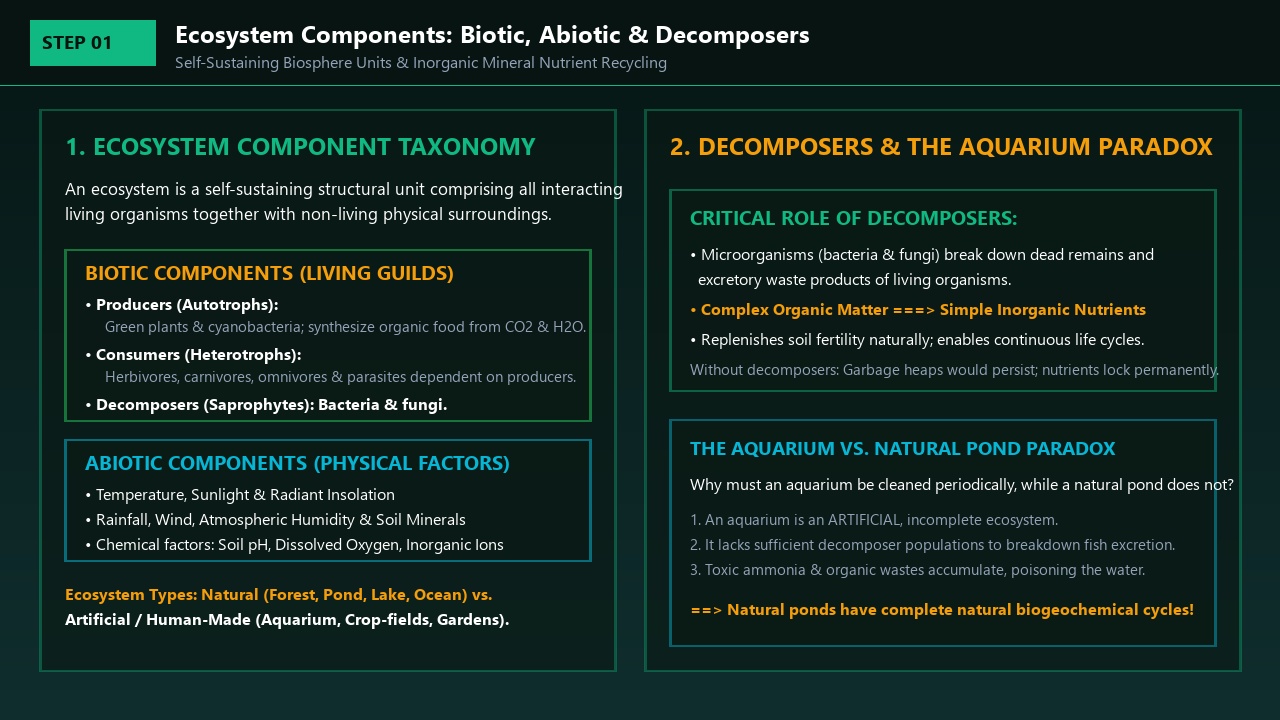
Figure 13.1: Ecosystem Components & Nutrient Cycling

1. Structural Components of an Ecosystem

An ecosystem consists of:

  1. Biotic Components (Living Community):
  • Producers (Autotrophs): Green plants, phytoplankton, and photosynthetic bacteria. Using chlorophyll, they capture solar radiant energy and convert simple inorganic carbon dioxide and water into complex organic chemical energy (sugar and starch).
  • Consumers (Heterotrophs): Animals and organisms dependent on producers:
  • Herbivores (Primary Consumers): Feed directly on plants (e.g., deer, rabbit).
  • Carnivores (Secondary/Tertiary Consumers): Feed on other animals (e.g., frog, tiger).
  • Omnivores: Feed on both plants and animals (e.g., humans, crows).
  • Parasites: Feed on living host tissues without killing immediately (e.g., Cuscuta, tapeworms).
  • Decomposers (Saprophytes): Saprophytic bacteria and fungi that feed on dead organic remains.
  1. Abiotic Components (Physical & Chemical Factors):
  • Sunlight, ambient temperature, rainfall, wind velocity, soil texture, pH, and dissolved mineral nutrients.

2. Natural vs. Artificial (Anthropogenic) Ecosystems

  • Natural Ecosystems: Operate without human intervention; self-sustaining and resilient (e.g., forests, ponds, lakes, oceans, natural grasslands).
  • Artificial Ecosystems: Engineered and actively maintained by human beings (e.g., crop-fields, gardens, aquariums).
  • The Aquarium Case Study (Activity 13.1):
  • An aquarium is an artificial, incomplete ecosystem.
  • Unlike natural ponds, an aquarium lacks a balanced population of natural decomposers. Uneaten fish food and fish excreta accumulate rapidly, producing toxic ammonia.
  • Hence, an aquarium requires artificial oxygen aeration (aerator pump) and regular periodic cleaning, whereas natural ponds clean and regulate themselves through natural microbial biogeochemical cycles!

3. The Vital Ecological Role of Decomposers

  • Decomposition Process: Microorganisms (bacteria and fungi) secrete extracellular digestive enzymes that break down complex dead organic biomass into simple inorganic substances.
  • Nutrient Cycling: These inorganic substances (nitrates, phosphates, potassium) enter the soil and water bodies, where they are re-absorbed by producer roots.
  • Consequences of Absence: In the absence of decomposers, dead organic matter and garbage would pile up endlessly, soil nutrients would become permanently exhausted, and the cycle of life would halt!
๐Ÿ“
Comprehensive High-Yield Mathematical Relations & Theorems

Complete step-by-step derivations, step traps, and LaTeX formula sheet breakdowns...

๐Ÿ”’

End of Free Notes Preview

Unlock the complete deck to access full LaTeX formula breakdowns, interactive diagrams, exam traps, and personal margin highlights!

๐Ÿ”‘ Sign In / Register Free
๐Ÿ”’
Step 3 is Locked

CBSE Diagnostic Mastery Quiz: Our Environment Board Level Challenge

This ๐Ÿ“ LaTeX Concept Notes is part of the full verified curriculum for Chapter 13: Our Environment. Unlock the full deck to gain permanent access to all 13 interactive stages, active recall cards, and diagnostic checkpoints.

Deck Access Price
100% Free with Account
Instant Access
โœ“ UPI & Cards Supported
๐Ÿ”‘ Sign In / Register to Unlock Free →
๐Ÿ”’
Step 4 is Locked

CBSE Diagnostic Mastery Quiz: Our Environment Board Level Challenge

This ๐Ÿ“ LaTeX Concept Notes is part of the full verified curriculum for Chapter 13: Our Environment. Unlock the full deck to gain permanent access to all 13 interactive stages, active recall cards, and diagnostic checkpoints.

Deck Access Price
100% Free with Account
Instant Access
โœ“ UPI & Cards Supported
๐Ÿ”‘ Sign In / Register to Unlock Free →
๐Ÿ”’
Step 5 is Locked

CBSE Diagnostic Mastery Quiz: Our Environment Board Level Challenge

This ๐Ÿ“ LaTeX Concept Notes is part of the full verified curriculum for Chapter 13: Our Environment. Unlock the full deck to gain permanent access to all 13 interactive stages, active recall cards, and diagnostic checkpoints.

Deck Access Price
100% Free with Account
Instant Access
โœ“ UPI & Cards Supported
๐Ÿ”‘ Sign In / Register to Unlock Free →
๐Ÿ”’
Step 6 is Locked

CBSE Diagnostic Mastery Quiz: Our Environment Board Level Challenge

This ๐Ÿ“ LaTeX Concept Notes is part of the full verified curriculum for Chapter 13: Our Environment. Unlock the full deck to gain permanent access to all 13 interactive stages, active recall cards, and diagnostic checkpoints.

Deck Access Price
100% Free with Account
Instant Access
โœ“ UPI & Cards Supported
๐Ÿ”‘ Sign In / Register to Unlock Free →
๐Ÿ”’
Step 7 is Locked

CBSE Diagnostic Mastery Quiz: Our Environment Board Level Challenge

This ๐Ÿ“ LaTeX Concept Notes is part of the full verified curriculum for Chapter 13: Our Environment. Unlock the full deck to gain permanent access to all 13 interactive stages, active recall cards, and diagnostic checkpoints.

Deck Access Price
100% Free with Account
Instant Access
โœ“ UPI & Cards Supported
๐Ÿ”‘ Sign In / Register to Unlock Free →
๐Ÿ”’
Step 8 is Locked

CBSE Diagnostic Mastery Quiz: Our Environment Board Level Challenge

This ๐Ÿ“ LaTeX Concept Notes is part of the full verified curriculum for Chapter 13: Our Environment. Unlock the full deck to gain permanent access to all 13 interactive stages, active recall cards, and diagnostic checkpoints.

Deck Access Price
100% Free with Account
Instant Access
โœ“ UPI & Cards Supported
๐Ÿ”‘ Sign In / Register to Unlock Free →
๐Ÿ”’
Step 9 is Locked

CBSE Diagnostic Mastery Quiz: Our Environment Board Level Challenge

This ๐Ÿ“ LaTeX Concept Notes is part of the full verified curriculum for Chapter 13: Our Environment. Unlock the full deck to gain permanent access to all 13 interactive stages, active recall cards, and diagnostic checkpoints.

Deck Access Price
100% Free with Account
Instant Access
โœ“ UPI & Cards Supported
๐Ÿ”‘ Sign In / Register to Unlock Free →
๐Ÿ”’
Step 10 is Locked

CBSE Diagnostic Mastery Quiz: Our Environment Board Level Challenge

This ๐Ÿ“ LaTeX Concept Notes is part of the full verified curriculum for Chapter 13: Our Environment. Unlock the full deck to gain permanent access to all 13 interactive stages, active recall cards, and diagnostic checkpoints.

Deck Access Price
100% Free with Account
Instant Access
โœ“ UPI & Cards Supported
๐Ÿ”‘ Sign In / Register to Unlock Free →
๐Ÿ”’
Step 11 is Locked

CBSE Diagnostic Mastery Quiz: Our Environment Board Level Challenge

This Microlearning Step is part of the full verified curriculum for Chapter 13: Our Environment. Unlock the full deck to gain permanent access to all 13 interactive stages, active recall cards, and diagnostic checkpoints.

Deck Access Price
100% Free with Account
Instant Access
โœ“ UPI & Cards Supported
๐Ÿ”‘ Sign In / Register to Unlock Free →
๐Ÿ”’
Step 12 is Locked

CBSE Diagnostic Mastery Quiz: Our Environment Board Level Challenge

This ๐Ÿง  Active Recall Flashcards is part of the full verified curriculum for Chapter 13: Our Environment. Unlock the full deck to gain permanent access to all 13 interactive stages, active recall cards, and diagnostic checkpoints.

Deck Access Price
100% Free with Account
Instant Access
โœ“ UPI & Cards Supported
๐Ÿ”‘ Sign In / Register to Unlock Free →
๐Ÿ”’
Step 13 is Locked

CBSE Diagnostic Mastery Quiz: Our Environment Board Level Challenge

This โšก Diagnostic Quiz is part of the full verified curriculum for Chapter 13: Our Environment. Unlock the full deck to gain permanent access to all 13 interactive stages, active recall cards, and diagnostic checkpoints.

Deck Access Price
100% Free with Account
Instant Access
โœ“ UPI & Cards Supported
๐Ÿ”‘ Sign In / Register to Unlock Free →